
Fort Smith Directory Holdings
Fort Smith has an unusually deep local shelf. The Barbara Jones Walker Genealogy and Arkansas History Department keeps hard-copy city directories from 1881 to the present, with some issues on microfilm. The inventory does not prove that every annual edition survives. Gaps must be logged rather than filled by guesswork. Named Polk editions confirm points in the run, while the Arkansas Studies catalog adds a Mahoney volume from 1895. Later address-first volumes can reverse a known street address into a listed name.
| Fort Smith collection | Verified span | Repository | How to consult it |
|---|---|---|---|
| City directory run | 1881 to present, with unlisted gaps | Fort Smith Public Library | Hard copy; part on microfilm |
| Polk editions | 1907 through 1960, selected verified years | FSPL and a published microfilm inventory | Library or listed microfilm |
| Mahoney Directory Company | 1895 edition | Arkansas Studies catalog | Catalog and microfilm inquiry |
| West Arkansas-East Oklahoma cross-reference | 1996 edition | FSPL catalog | Address-oriented shelf lookup |
| Local newspaper archive | 1848 through 1973 searchable | Fort Smith Public Library | Free online text and page images |
The Polk years specifically verified are 1907, 1910-11, 1925-26, 1928-30, 1938, 1951, 1953, 1955, 1957, and 1959-60. Library records also point to Polk, R.L. Polk, or Equifax sale-list volumes from 1991 through 2001, but a librarian should confirm which volumes remain. A catalog clue is not the same as a complete, continuous Fort Smith city directory run.
Fort Smith Directory Research Desk
The genealogy department at 3201 Rogers Avenue holds about 25,000 titles. It opens Monday, Wednesday, and Thursday from 9 a.m. to 5:30 p.m.; Tuesday from 9 a.m. to 8 p.m.; Friday from 9 a.m. to 5 p.m.; and Saturday from 10 a.m. to 5 p.m. It is closed Sunday. Call 479-783-0229 before a long visit if a certain year is vital. The genealogy books are noncirculating but open-stack. Arkansas materials and original documents are closed-stack, so staff must retrieve them.
Microfilm remains usable during regular main-library hours even when the genealogy desk is closed. Readers can also ask staff about local yearbooks, early funeral-home files, cemetery indexes, census film, and Dawes Commission rolls. Each can help when a city directory gives only a terse name and address.
Research tip. Photograph the title page and abbreviation key first, since symbols and shortened terms can change between publishers and years.
Fort Smith Directory Publisher Clues
Publisher names help locate a missed edition. Polk is the best documented label in the twentieth-century run. Mahoney Directory Company is tied to the 1895 Fort Smith city directory in the Arkansas Studies Research Portal. That catalog group also includes an 1855 surveyor plat book, maps from about 1850 through 1903, family Bibles, and biographical sketches. These items form a dense bridge between a person, a parcel, and a place.
A standard alphabetical listing is name-first. A later cross-reference or criss-cross volume is address-first. The catalog verifies a 1996 Polk West Arkansas-East Oklahoma cross-reference volume, not a full run of address-first books. Ask for that exact title, then have staff check adjacent cataloged years.
Note: A publisher change may alter abbreviations, scope, and street sections even when the Fort Smith directory title looks nearly the same.
Read Fort Smith Directory Entries
A verified 1936 citation places Powers Brothers Service Station at 2601 N. Sixth. It shows that a Fort Smith entry can connect a named concern with a precise address. No full local scan was open for field-by-field review. Polk customs suggest many volumes may include surname and given name, spouse, trade, employer, and residence, but the key in the volume controls. Never assign a meaning to a letter or mark from another city’s directory.
| Listed name | Copy the spelling, initials, and nearby same-name entries. |
|---|---|
| Spouse clue | Record it only when the local entry or key confirms the notation. |
| Trade or firm | A role or business clue, not proof of a home address by itself. |
| Street address | The listed place for that edition; moves between issues may be absent. |
| Owner or renter mark | Use only when the exact Fort Smith key defines the symbol. |
- Criss-cross directory
- An address-first section arranged by street and house number rather than surname.
- Householder index
- A finding aid for listed heads of households, not a full count of every occupant.
- Abbreviation key
- The volume’s own legend for shortened words and symbols; it controls interpretation.
Fort Smith Directory Map Story
Sanborn fire-insurance atlases show how fast the directory’s physical setting grew. The Fort Smith sequence expanded from 7 sheets in 1886 to 14 in 1889, 15 in 1892, 31 in 1897, 40 in 1901, and 84 in 1908. A sheet records a building’s footprint, use, and material. It can show whether an address existed, changed form, or stood on a differently named street when a resident was listed.
The National Archives census research guidance leads to schedules that can turn one directory name into a household. Federal schedules through 1950 are public under the 72-year rule. The next release, for 1960, comes in 2032. A directory supplies a narrow snapshot. A census can add relatives, ages, and household structure on one fixed date.
Fort Smith’s record timeline gives useful anchors:
- 1817: Fort Smith began as a United States military post.
- 1842: The city incorporated on December 24.
- 1881: The city directory run and local birth and death reporting begin.
- 1895: A Mahoney directory is preserved in the Arkansas Studies catalog.
- 1996: A regional Polk cross-reference volume is cataloged at FSPL.
Fort Smith Directory Gap Fillers
A person may vanish between editions because of a move, death, omission, or change in spelling. The Fort Smith historical newspaper archive covers papers from 1848 through December 31, 1973 in full-text and page-image search. Obituaries, ads, legal notices, and social columns can connect an old listing to a later address.
Open the digitized Fort Smith newspaper search before reviewing its interface below.
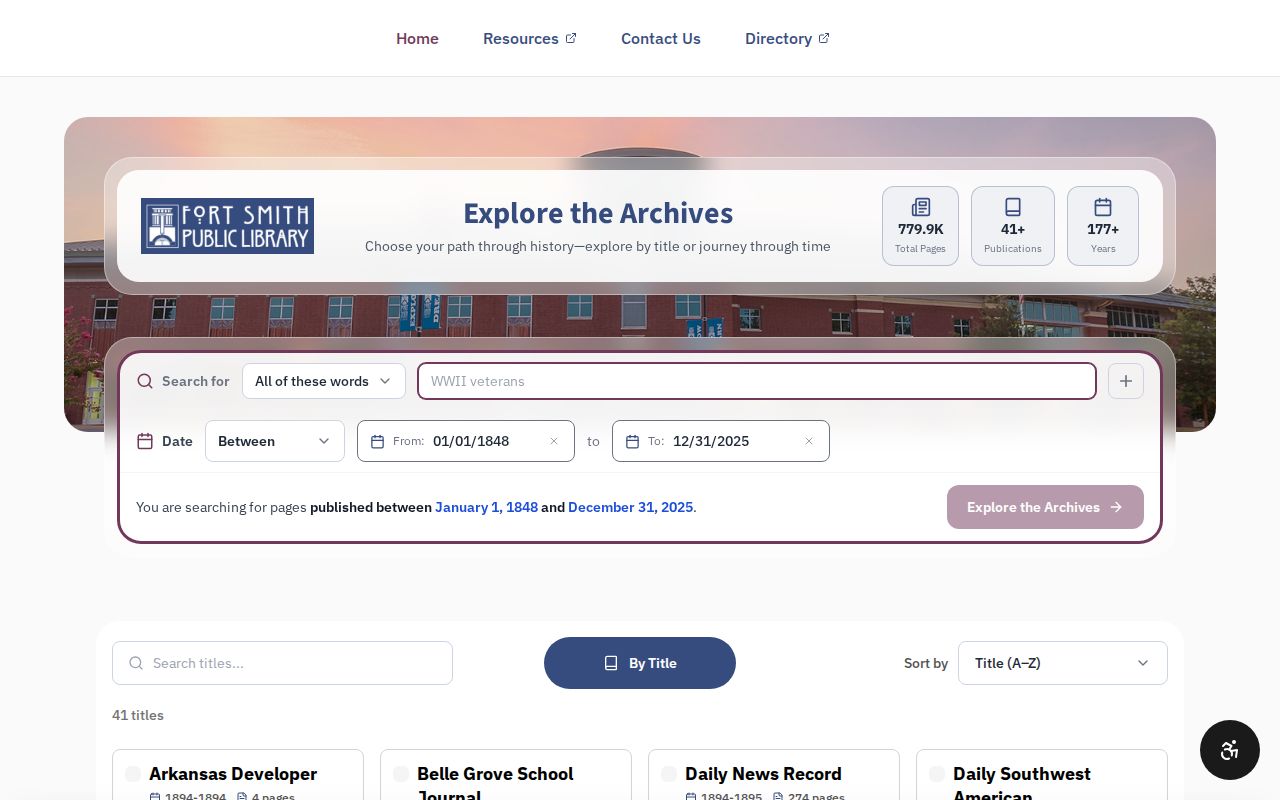
The archive provides a remote bridge when a directory year is missing. Check the page image because optical character recognition can misread names. Yearbooks, funeral-home records, and cemetery indexes offer other paths. The library’s named cemetery ranges include Calvary through 1991, Forest Park from 1910 to 1988, Rose Lawn and Holy Cross from 1930 to 1991, and National Cemetery through 1990.
Fort Smith Directory Catalog Routes
Not every useful item sits in one portal. The Arkansas Studies catalog can lead to maps, plats, microfilm, and the Mahoney edition. The Fort Smith Historical Society research resources point toward regional institutions and warn that the 1903 Sebastian County atlas contains errors. Its diagrams may guide a search, but each claim needs support from a deed, plat, map, or directory.
View the Arkansas Studies digital collection interface shown here.
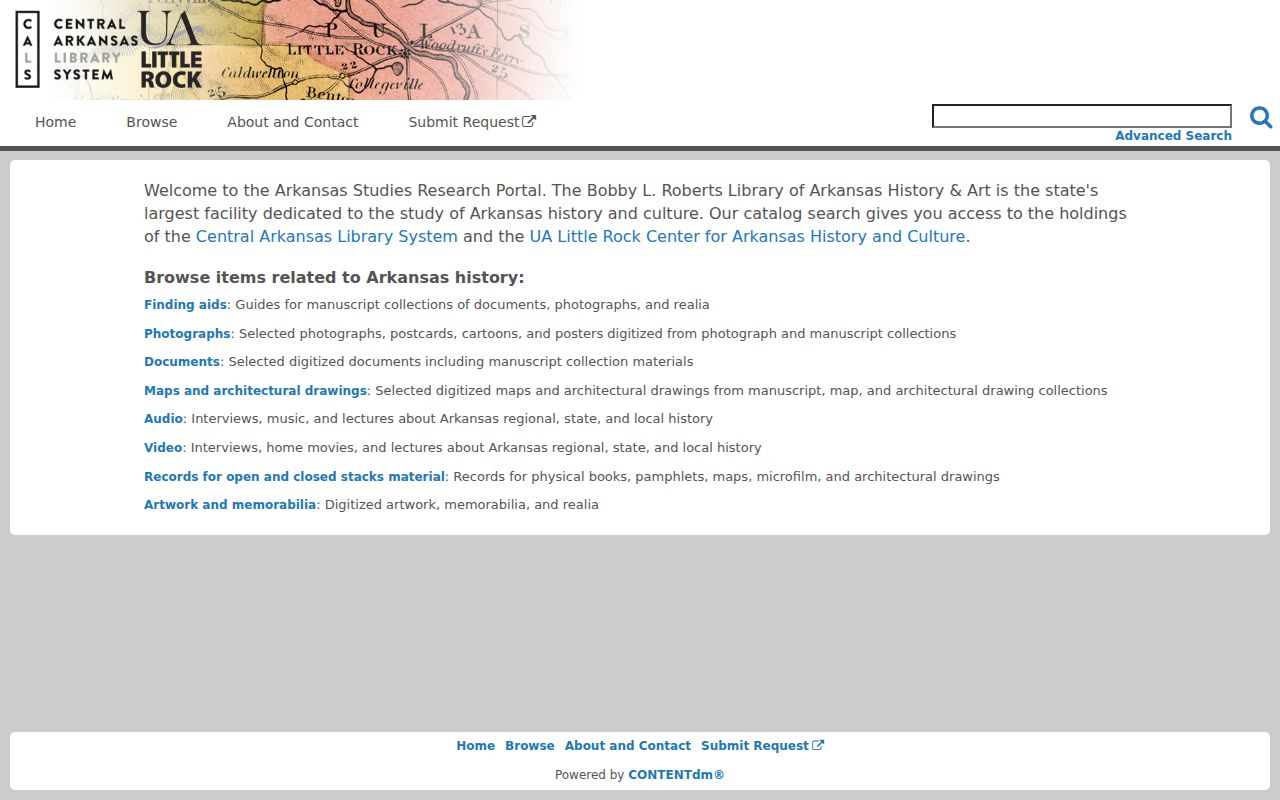
The catalog broadens a city directory search beyond one shelf. A record may still require a microfilm request, staff retrieval, or a visit. Preserve the repository, title, date, and call details when asking for help.
Trace Fort Smith Directory Families
Family history works best when each source has one purpose. Start with the city directory for the listed name and address. Use the closest public census to test whether relatives or boarders shared that place. Move forward and back through nearby volumes, keeping every variant spelling. Fort Smith’s diverse history makes diacritics, compound surnames, and anglicized forms worth checking rather than treating one spelling as final.
- Begin with the best known year, surname, and Fort Smith address.
- Read the alphabetical entry and copy its wording exactly.
- Check the street section for that house number and nearby listings.
- Compare the volumes just before and after the date.
- Pair the result with the nearest census through 1950.
- Test a disappearance in news, probate, cemetery, and obituary indexes.
The Fort Smith resident lookup can help verify a modern name found at the end of a historical trail. For current parcel work by address, the Fort Smith street directory keeps the modern owner workflow separate from the historical shelf.
Fort Smith Directory Staff Searches
A distant researcher can use the library’s paid service. General genealogy or reference work costs $20 per hour with a 15-minute minimum. Payment covers staff time even when the search finds nothing. Results can be sent in digital form, while print and mail add cost. The request asks for contact details, a library-card number, request type, and a clear research narrative.
The focused obituary request costs $5 per name and includes 15 minutes plus a digital copy when found. The usual response is three to five business days. Supply first, middle, last, maiden, and nickname forms when known, along with parents, dates, places, newspaper, and a likely publication date. Those facts help staff connect a Fort Smith city directory disappearance to a notice without merging two people who share a name.
Phone and mail are useful when online catalogs stop. Call 479-783-0229 for the genealogy desk, or send a focused request that names the edition and the person sought. For closed-stack Arkansas material, ask staff to pull the item. For microfilm, give a narrow date range and identify whether the goal is a directory, newspaper, census, or funeral-home record. This keeps the search tied to the correct collection and reduces the chance that a same-name result is mistaken for the target family.
Review the National Archives census research route that supports directory-to-household work.
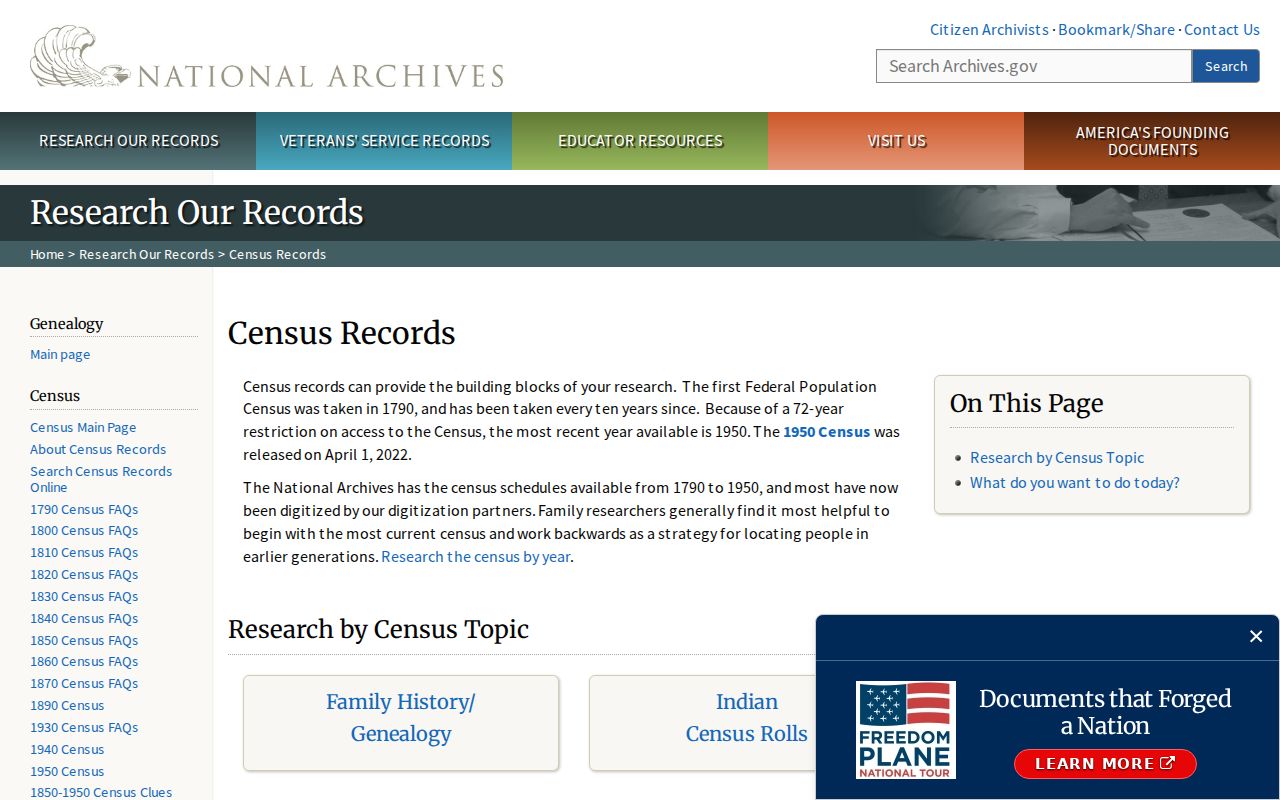
The federal census route can add household detail to a Fort Smith directory entry. Note: An index or staff finding is evidence to follow, not proof of uninterrupted residence or a certified record.